What are the top 10 trends for the next ten years? Download the report here.


September 29, 2025
Across North America, rural communities are competing fiercely for new manufacturing plants, data centers, and business investments.
Incentives and land still matter—but one factor increasingly determines who wins and who gets left behind: energy.
For companies making significant capital investments, reliable, affordable, and flexible energy isn’t a “nice to have.” It’s the top priority for site selection.
Rural communities often face bigger challenges in delivering dependable power for economic development projects. To compete, innovative approaches like microgrids and behind-the-meter (BTM) systems must become the rule, not the exception.
Three Levers Rural Communities Can Pull
In this post, we’ll highlight three ways rural communities can take charge of their energy future—and their economic destiny:
Partner with district energy companies to integrate microgrids and BTM solutions.
Tailor BTM alternatives to local economic needs.
Use energy strategy as a driver of economic growth and resilience.
1. Tapping Into District Energy Expertise
Rural communities can draw on a wide range of partners to plan and build microgrids and BTM systems. These include project developers, engineering firms, utilities, large corporations, renewable and storage providers, oil and gas companies, technology and grid infrastructure firms, and national labs and government programs.
Among these, district energy companies stand out. They’re uniquely positioned to deliver flexible, reliable, and cost-effective solutions.
For decades, district energy companies have supplied clusters of buildings with heating, cooling, and sometimes electricity from centralized plants.
Now, many are stepping into a new role as microgrid integrators. They use their operational expertise to design and run local energy systems that meet community and business needs.
Here’s why they’re smart partners:
Resilience and Reliability: Their microgrids can “island” from the main grid during outages, keeping critical services running through storms and instability.
Lower Barriers for Rural Communities: They handle planning, financing, regulatory compliance, and operations—removing steep technical and capital hurdles for rural leaders.
Integrated Solutions: They can combine geothermal, CHP, solar, batteries, or even small modular nuclear into efficient, flexible systems for industrial parks, healthcare campuses, or town centers.
Bottom line: District energy companies bring both technical muscle and practical know-how to projects that rural communities often can’t tackle alone.
2. Customizing Behind-the-Meter Systems For Rural Growth
Not every community needs the same energy solution. District energy providers can tailor BTM systems to fit local industries and economic realities.
Examples include:
Geothermal microgrids for food processors and greenhouses with high thermal demands.
Natural gas CHP systems for agricultural businesses and rural industrial parks.
Solar or small modular nuclear microgrids for clusters of schools, clinics, or commercial centers.
Many providers offer “energy as a service” models. Communities get reliable power at predictable costs without massive upfront expenses.
The result: Rural businesses can invest in growth instead of building and maintaining complex energy infrastructure.
3. Using Energy Strategy As A Deliberate Economic Tool, Not An Afterthought
Communities can use energy strategy as a deliberate economic development tool by aligning energy investments with their growth priorities. This means treating energy decisions—like where to build microgrids or how to structure local power partnerships—as strategic choices that shape business attraction, job creation, and long-term resilience, not just technical infrastructure upgrades.
Reliable local energy doesn’t just keep the lights on. It sets the stage for growth. Tailored microgrid and BTM solutions help rural communities:
Attract new industries that need stable, affordable power.
Create local jobs in energy operations and maintenance.
Keep wealth circulating within the community instead of flowing out.
Microgrids lay the technical foundation for sustainable growth, turning energy from a barrier into a competitive edge.
Flip the Script on Rural Energy
Rural communities don’t have to wait for distant utilities or costly grid upgrades to shape their economic future.
By partnering with district energy companies and adopting tailored BTM strategies, they can turn energy challenges into engines of economic renewal.
Reliable energy isn’t just infrastructure—it’s the foundation for lasting opportunity and resilience.
Take a look at your community’s strategy. Does it treat energy as critical infrastructure—or as an afterthought? If it’s the latter, what’s one step you could take this year to change that?
If you enjoyed this post, please subscribe to our newsletter.
David G. Brown
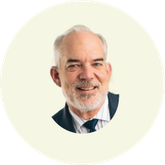
This guy. David G. Brown has led economic development efforts in Michigan, Indiana, South Carolina, and Nebraska, winning Chamber of the Year at the Greater Omaha Chamber where he served for two decades. David is a legend: past Chair of ACCE; the driving force behind ACCE’s Horizon efforts; and winner of the 2025 ACCE Life Member Award. His successor calls him a "once-in-a-generation economic developer" for David's ability to create a North Star that becomes an entire community's shared vision of success. That's what he did with Omaha 2040, resulting in everything from Omaha’s riverfront development to a new downtown and streetcar plan. David's knowledge of Chambers and economic development is encyclopedic, but his purpose is singular: more ambitious and prosperous futures for all. Book a meeting with David and ask him about bourbon, cigars, the Huskers…or opera.

Four Questions to Help You Think Bigger About the Future
Provocative questions are powerful. Here are four tried-and-true queries that help groups think proactively about their futures.1. Thinking back, what big ideas or opport...

December 4, 2025

6 AI Truths for Leaders (2025)
Hi, folks! In November 2025, I had an opportunity to offer my perspective on AI and its future. Here's the summary slide, followed by some commentary:...
December 2, 2025

Using Good Times Wisely: The Long Game
Prosperity isn’t a pause between challenges—it’s the moment when future-ready leaders invest in the systems, skills, and relationships their communities will need when cycles turn again.
December 2, 2025